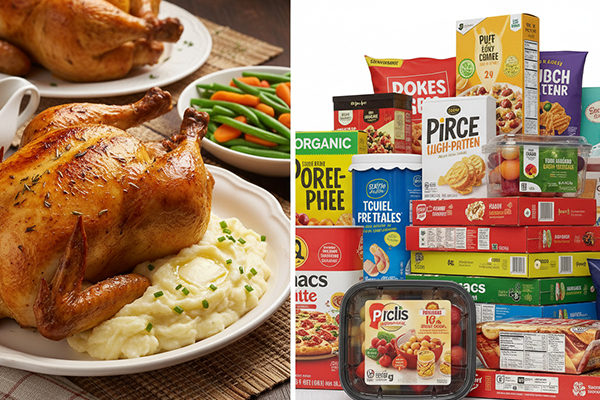
Walk through a grocery store today and everything looks… normal.
Same shelves. Same brands. Same promises:
“Healthy.”
“Low fat.”
“Heart-friendly.”
But talk to enough people, and you’ll hear a different story.
👉 “Food didn’t used to affect me like this.”
👉 “I feel different after eating now.”
👉 “I get tired way faster than I used to.”
It’s subtle.
But it’s consistent.
And it’s leading more people to ask:
“Did something change in our food… or is it just me?”
Same shelves. Same brands. Same promises:
“Healthy.”
“Low fat.”
“Heart-friendly.”
But talk to enough people, and you’ll hear a different story.
👉 “Food didn’t used to affect me like this.”
👉 “I feel different after eating now.”
👉 “I get tired way faster than I used to.”
It’s subtle.
But it’s consistent.
And it’s leading more people to ask:
“Did something change in our food… or is it just me?”
Food didn’t just evolve—it was engineered
Over the last few decades, food hasn’t just improved in convenience.
It’s been optimized.
For:
It’s been optimized.
For:
- longer shelf life
- better taste consistency
- lower production costs
- mass distribution
That means more:
- preservatives
- stabilizers
- emulsifiers
- refined ingredients
None of these are inherently “bad” on their own.
But here’s where it gets interesting:
We’re not eating them occasionally—we’re eating them constantly.
But here’s where it gets interesting:
We’re not eating them occasionally—we’re eating them constantly.
The compounding effect most people overlook
One packaged product? Probably not a big deal.
But stack a full day of eating:
But stack a full day of eating:
- breakfast bar
- sandwich bread
- sauces and dressings
- snacks
- drinks
Now you’re layering dozens of processed ingredients… every single day.
And over time, people are starting to notice patterns:
And over time, people are starting to notice patterns:
- feeling more sluggish after meals
- energy that doesn’t last
- needing more food to feel satisfied
Not extreme reactions.
Just a steady sense that something feels… different.
Just a steady sense that something feels… different.
Why this shows up in energy first
Here’s the part most people don’t connect:
Food isn’t just calories—it’s instructions for your body.
Your body has to:
Food isn’t just calories—it’s instructions for your body.
Your body has to:
- break food down
- absorb nutrients
- convert it into usable energy
When food is simpler, that process tends to run smoothly.
When food is more complex or heavily processed, that process can feel less efficient.
And the first place you feel that?
👉 Your energy.
When food is more complex or heavily processed, that process can feel less efficient.
And the first place you feel that?
👉 Your energy.
A simple test most people have never tried
Here’s something practical you can try immediately:
👉 Pick one meal a day and keep the ingredient list under 5 items.
👉 Pick one meal a day and keep the ingredient list under 5 items.
Example:
- eggs + potatoes + salt
- chicken + rice + olive oil
Then compare:
- More stable?
- Less crash?
- Less craving afterward?
Most people notice a difference fast.
The quiet shift happening right now
People aren’t panicking.
They’re not overreacting.
But they are becoming more aware.
They’re starting to ask:
They’re not overreacting.
But they are becoming more aware.
They’re starting to ask:
- What’s actually in this food?
- How often am I eating this?
- And how do I feel afterward?
Because once you notice the patterns…
It’s hard to unsee them.
And for a lot of people, that awareness is changing how they approach food entirely.
It’s hard to unsee them.
And for a lot of people, that awareness is changing how they approach food entirely.